Software for medical devices and digital health
Since 2017 we have been turning medical devices into digital products: companion apps, remote monitoring, patient-doctor ecosystems.
Some key figures
From our first medical project in 2017 to today's releases: four numbers that show how we work.
Our journey in medical software design begins
Company conformity certification
The fastest release on the App Store and Google Play (SilverLine)
of BLE connection issues solved with a multi-device architecture (Medic@re)

01 Interfaces designed for the people who actually use them
An eighty-year-old patient at home, a nurse at the end of a shift, a physiotherapist between two sessions: a medical device interface is designed around them first, and around the hardware's features second.
Guided onboarding, readable text, high contrast, few mandatory steps: choices we put to the test with the people who will actually use the app, before release. Because an app the patient abandons is a device left in a drawer.
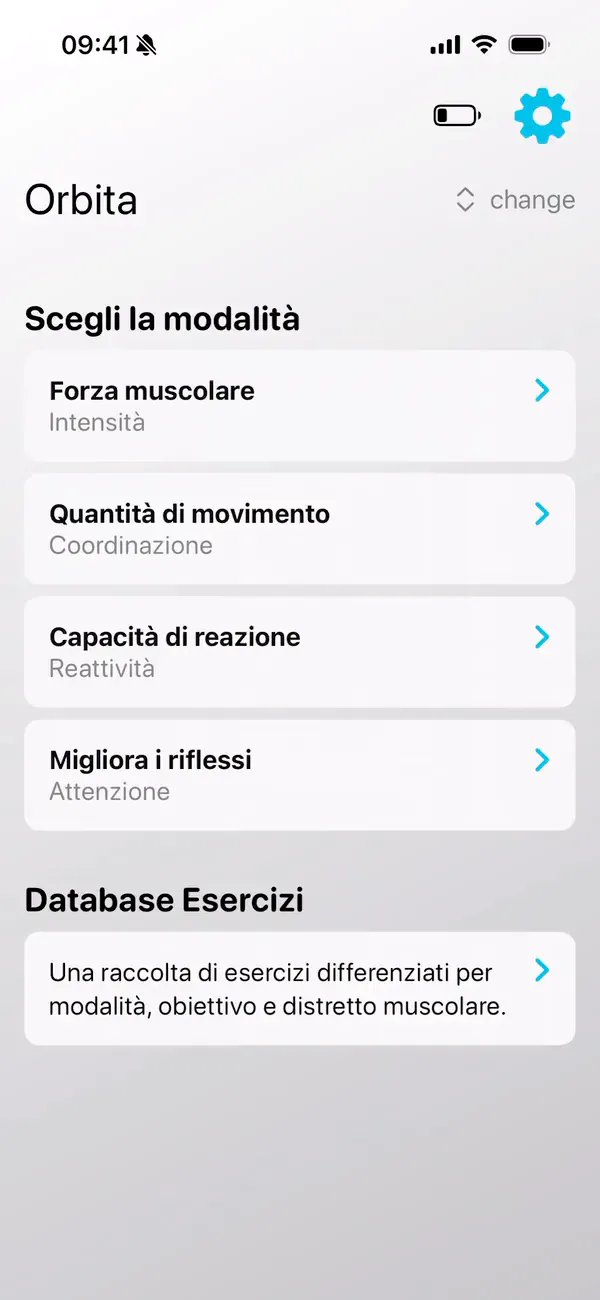
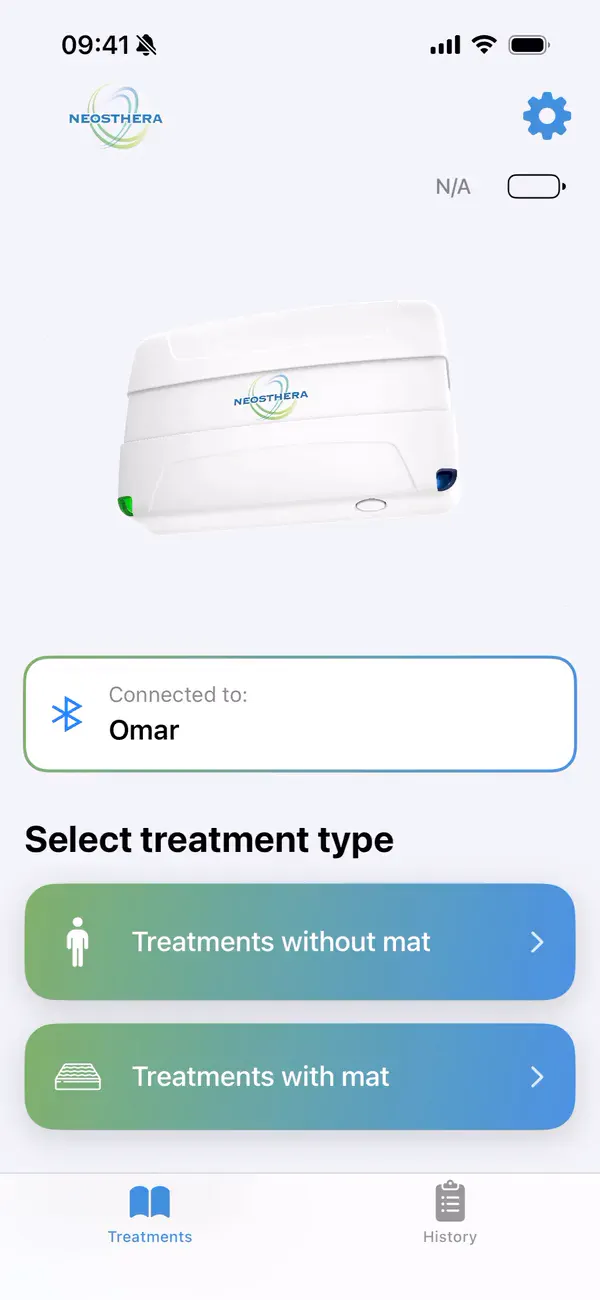
In Orbita, onboarding explains the app in under a minute; in NeosThera the device has a single button and everything else happens on the smartphone.
02 Connected devices are our craft
Pulse oximeters, smart inhalers, chest drains, sensorized balls, clinic-grade electromedical devices: the software we write talks to real sensors every day, over Bluetooth Low Energy, often with proprietary protocols and no SDK.
We know what happens in the real world: electromagnetic interference on hospital wards, elderly patients who struggle with pairing, connections that drop mid-measurement. That's why we design automatic retries, offline buffering and robust synchronization — before they turn into support tickets.
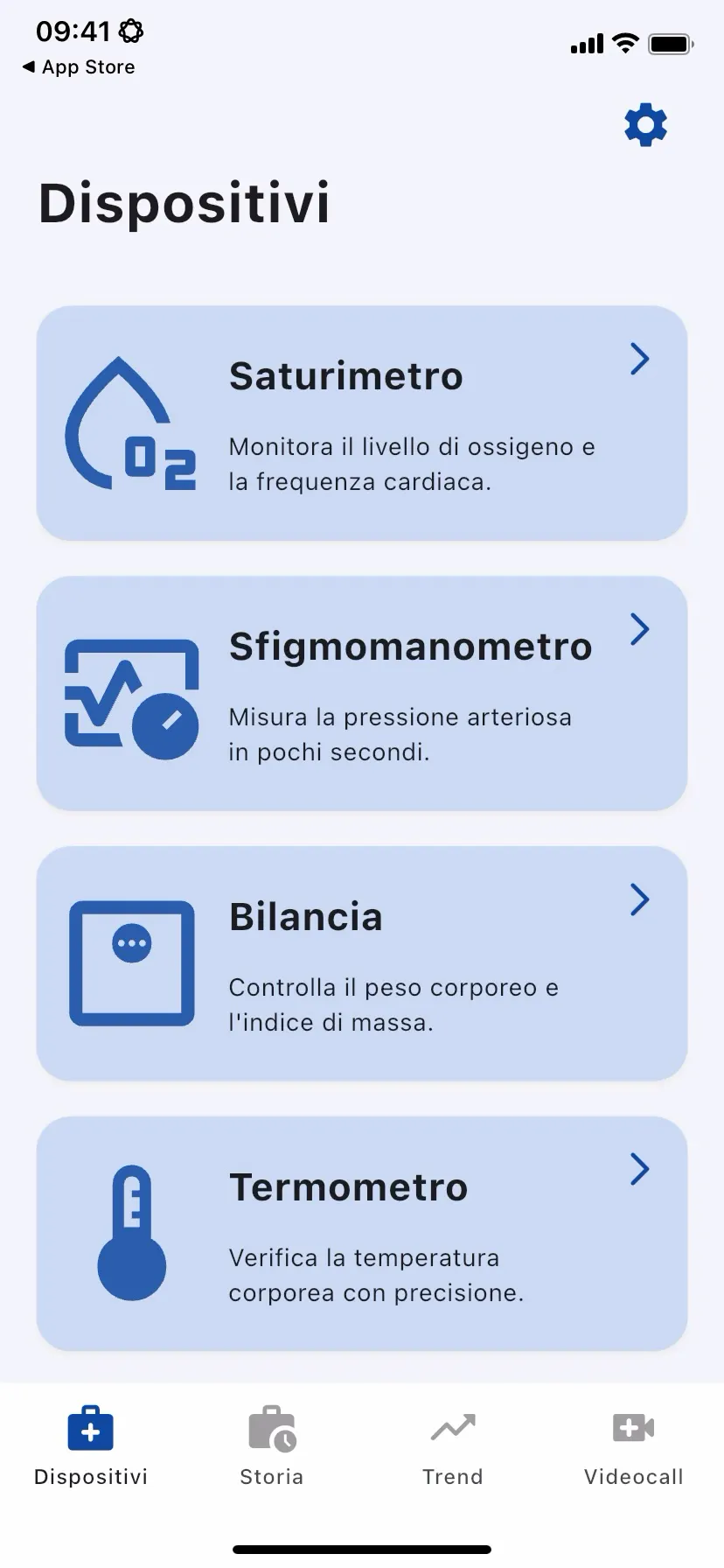
In Medic@re, a single mobile hub normalizes the protocols of multiparameter devices from different manufacturers.
03 Reliable clinical data, from sensor to report
A measurement is only useful if it reaches the person who has to make a decision intact, with its timestamp and its patient: that is why we design the data path together with the interface, not afterwards.
Encrypted local storage, deferred synchronization when the network is missing, a history that survives a connection dropping halfway. And on the way out, formats that clinical systems can read, so nobody copies values by hand.
In SilverLine, chest drainage is sampled every 5 seconds over encrypted Bluetooth, with export to the electronic health record.
What we build
Medical device companion apps
The device has the hardware,
the app has the interface: parameter control, therapy protocols, history.
Patient-doctor ecosystems
Patient app + clinical dashboard + cloud: from sensor to insight for the physician.
Telemedicine and remote monitoring
Parameters measured at home flow into a single app and become readable for whoever follows the patient remotely: trends, alerts, video visits.
Software for wards and clinics
Several patients on one screen, alerts with customizable thresholds, data ready to export to the electronic health record.
The projects, by the numbers
Companies we have worked with:
FAQ
Yes: most of our projects are companion software for medical devices. We develop according to IEC 62304, with requirements traceability and documentation designed to feed into the manufacturer's technical file. The regulatory strategy remains the manufacturer's; we build the software so that it is never the bottleneck.
It depends on the scope: an MVP takes 12-16 weeks on average, a complete product with certification 6-9 months.
We define it together during the discovery phase.
Yes, it is the most common case: in almost every project on this page the hardware was already there, often already certified. We start from the firmware and protocol you have, even if proprietary and without an SDK, and build the app around them. If a firmware change would help, we propose it to your team: whether and when to make it is your call.
The code is yours: on delivery we transfer repositories, documentation and rights.
Both. With startups we often start from the prototype and reach the first release, with scope and timing agreed before we begin. With established companies we fit into the processes already in place (quality, regulatory, R&D) and work alongside the internal teams.
New challenges
Have a device to turn into a digital product?
Tell us where you are – idea, prototype or product already on the market. We will get back to you within one business day.
TELL US ABOUT YOUR PROJECT